When I first added a picamera to Carl (2018-09-29) I dreamed that my Raspberry Pi based GoPiGo3 would
- wander my home,
- snap photos,
- return to his dock
- (isolate objects in the photos)
- compare the objects/photos to a “known object database”
- identify unknown object photos
- “ask” me for the identity of the unknown object
thus building a knowledge base of every item Carl might encounter in his environment.
When Google created their image recognition Cloud API, I imagined Carl might send a small number of images to Google each day and change the “ask me for the identity” to “confirm the identification of this unknown object”
When DI added the TensorFlowLite example to the DexterOS Jupiter Notebook, the dream seemed to be gaining possibility.
Eventually the Internet was filled with machine learning examples and it seemed everyone but me was building training sets. I was not and still haven’t jumped on that train. These days, I read about 10 year olds learning to train their custom vision recognition models and large language models, and that AI education has replaced robotics education in the secondary education scene.
Eventually as I figured out, the Pi Camera plus a Raspberry Pi 3, 4, and even Pi5 was proven not to be enough to run vision recognition models as fast as desired. Enter cameras with a built in AI processor, like the Oak-D-Lite and eventually the Pi AI Camera.
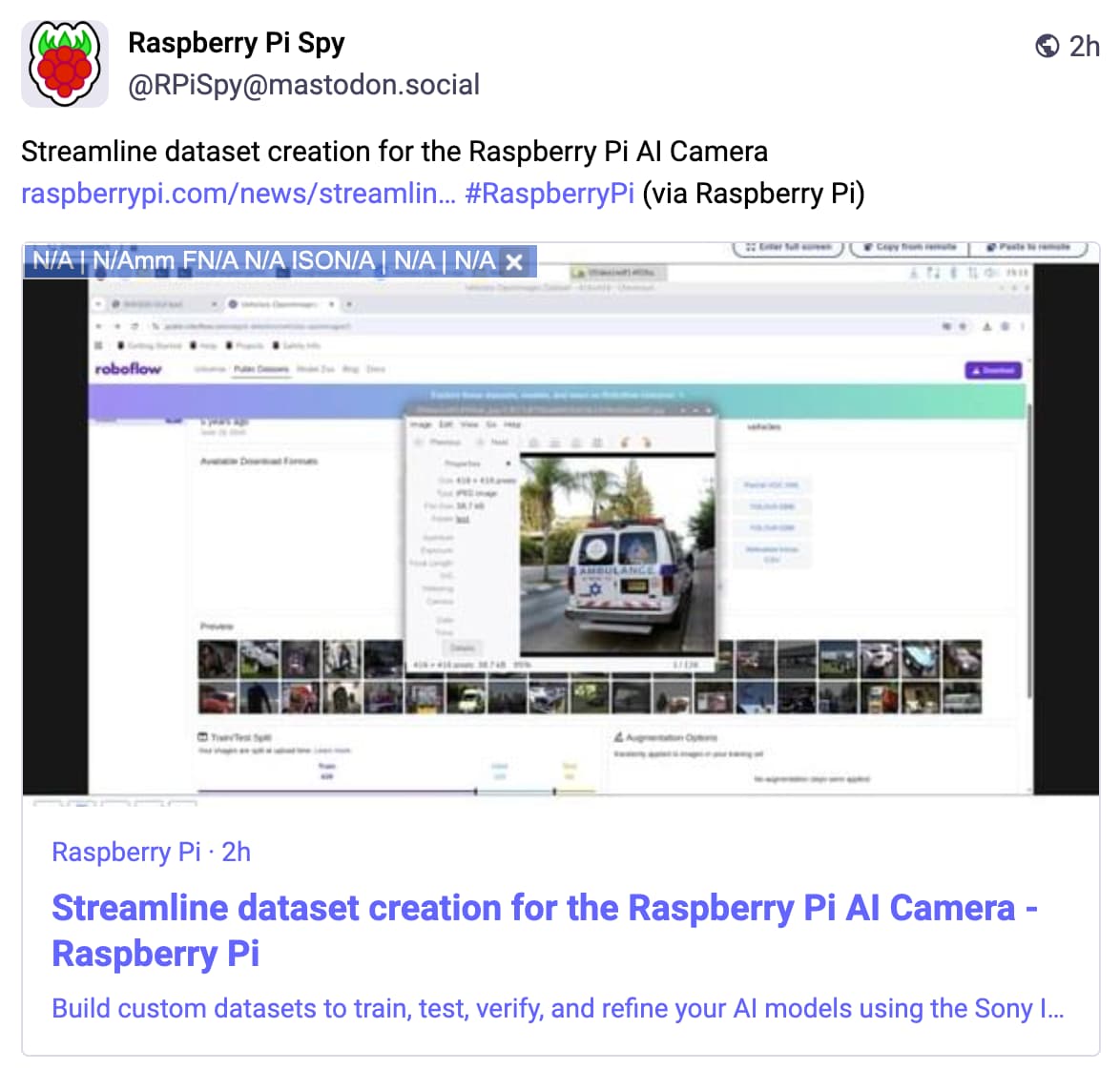
Ran across an article tailored to the Raspberry Pi and Pi AI Camera - (still not on my “ToDo” timeline):
Actually Only Humans Can Do This
Turns out knowing that you do not know the answer is currently too hard for the current generation of Artificial Intelligence - something humans are quite good at actually.